

Emigrating from Holland
Where to go?

I had stopped writing poetry. No more long poems full of adolescent wisdom and gently pervading sadness. Some actually had been published, but most of them got lost somehow. Maybe just as well, they must have been pretty bad. Actually, I once tried to translate one of the few I still had. No good. Not only did it sound sloppy and sentimental, but the English words also had the wrong sound pattern. It just didn’t work. It was a poem about my studio after a party, straight after my friends had left. About some empty wine glasses, a full ashtray and - on the floor - a reed pen and a broken gramophone record. And how I took a lump of modelling clay to try and give shape to ‘the formless thought still floating around.’ That kind of stuff.’
‘A reed pen, Grandpa?’
‘I used to do a lot of pen and ink drawings, and rather than using the special steel nibs I preferred to use pens made of bamboo. You could work faster with those, more spontaneous, and also, with a good reed pen you could do textures and shading.
But I must tell you about that gramophone record I mentioned in that poem. First I have to go back several years to the evening before one of the worst razzias of the war, That evening my friend had called me over to his place to give me his gramophone ‘to remember him by.’ It was the last time we talked: he never came back from the gas chambers. So, I treasured that gramophone.
On the day of the party of that poem I had stopped off at the old flea market in Amsterdam, the famous Waterlooplein. One of the stallholders had displayed a stack of small, tired looking 78 records, and amongst those was one with a Russian label on it. Of course, I had no idea what it could be, but I bought it straight away. At home I played it all afternoon, until the melody was stuck in my mind forever. Somebody sat on that record the same night, but I’ve played that song I don’t know how often ever since. On pan flute, on saxophone, on guitar. Even on my silver flute during an interview for Brisbane Radio. Just once did I hear it again - or the tail end rather - on New Zealand Radio with Ivan Rebroff singing it. Too late to hear the title, but for me that song lives on regardless. And whenever I play that song, I’m reminded of my decision to make sure our son would never face a war.
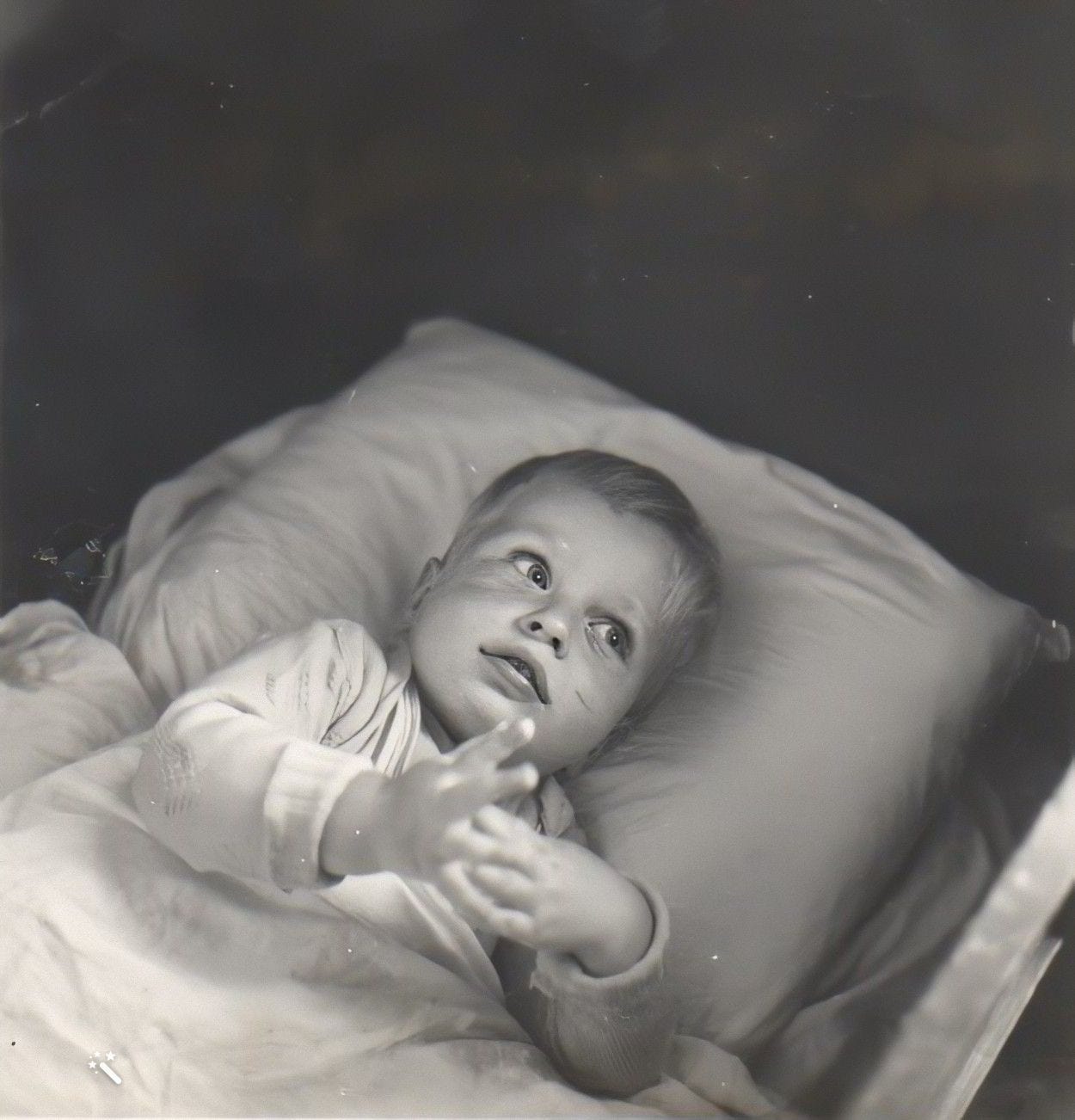
All that went through my mind standing over his bassinet that night when Gino was born. And I remember how determined I was that he would never have to suffer through racism. No matter what I would have to do, or whatever it would take.’
‘Is that when you began to think of emigrating?’
‘No, not then. The only two countries I had ever thought of going to, were Israel and South Africa. I hated the thought of apartheid and Israel? Could you think of a country that would be more war-torn and affected by racism than Israel? I couldn’t. Somehow, we would find a way though. It had to be possible.
A week later I returned the hospital bed to the Red Cross and hoisted our double bed up again through the window. Not really enough space in our living room though for the three of us, and eventually we were allowed to screen off another little corner in the bike-shed attic. Just big enough for the bassinet and later the baby cot I had slept in all those years before. Some shelves at the foot end and a space in front to squeeze into to put the boy to bed.
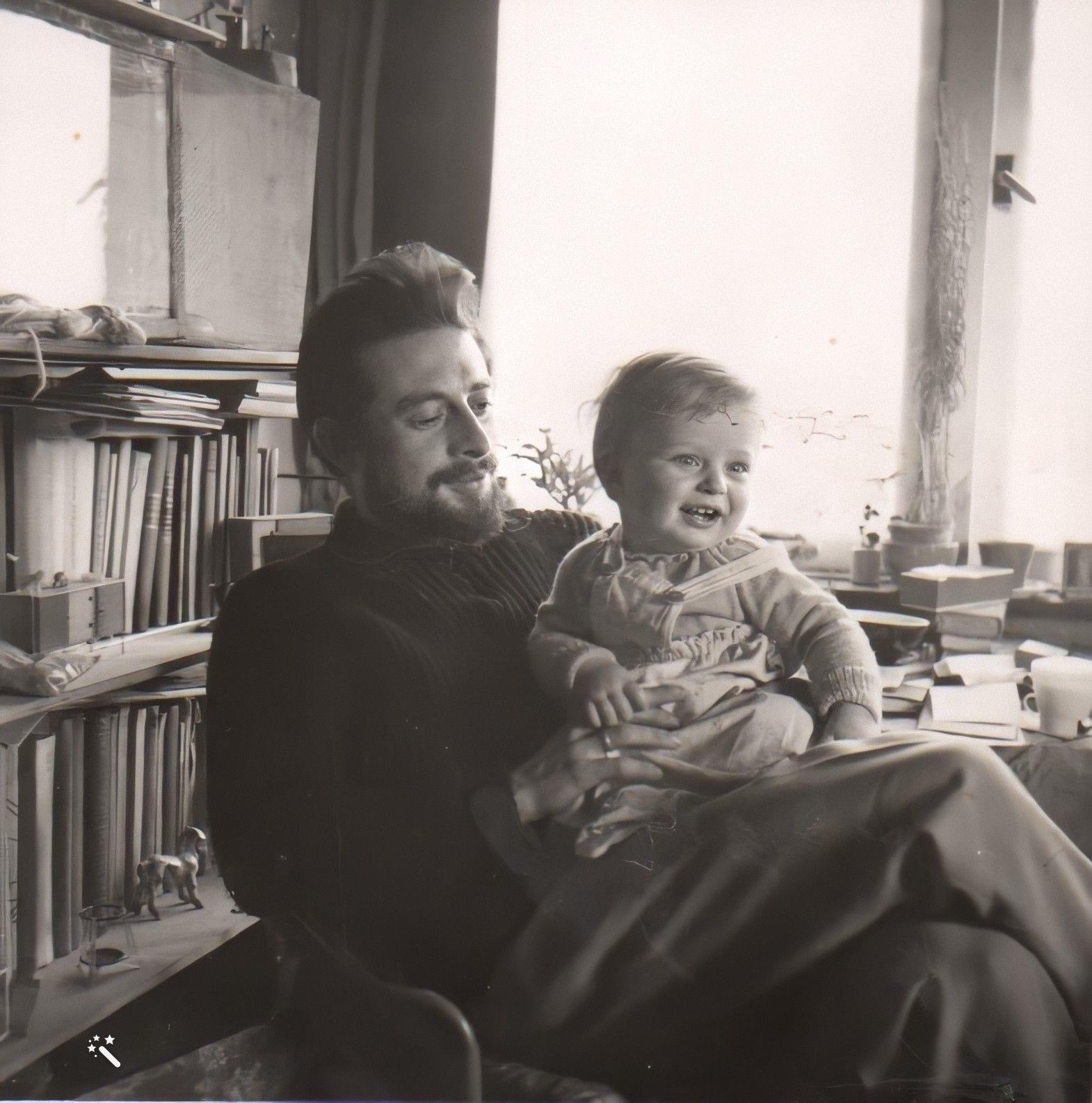
We learned to stand over the gas ring at night to heat up the baby bottle for his supplementary drink, and we learned to hold him in one arm to carry him up and down the steep stepladder.
We learned how many nappies we had to wash at very frequent intervals, but we never needed to learn how to respond to his early smiles.
However, we also learned to worry about the future. The waiting list for a place of our own, a small unit in some apartment building, was still seven years, and he would have outgrown the baby cot long before. Where could he sleep then? What to do once he would go to school?
My future as an artist looked very promising, especially with the support of Jhr. Sandberg, but it would be a long time before I could be totally self-sufficient with pure art. What kind of future could we offer Gino?
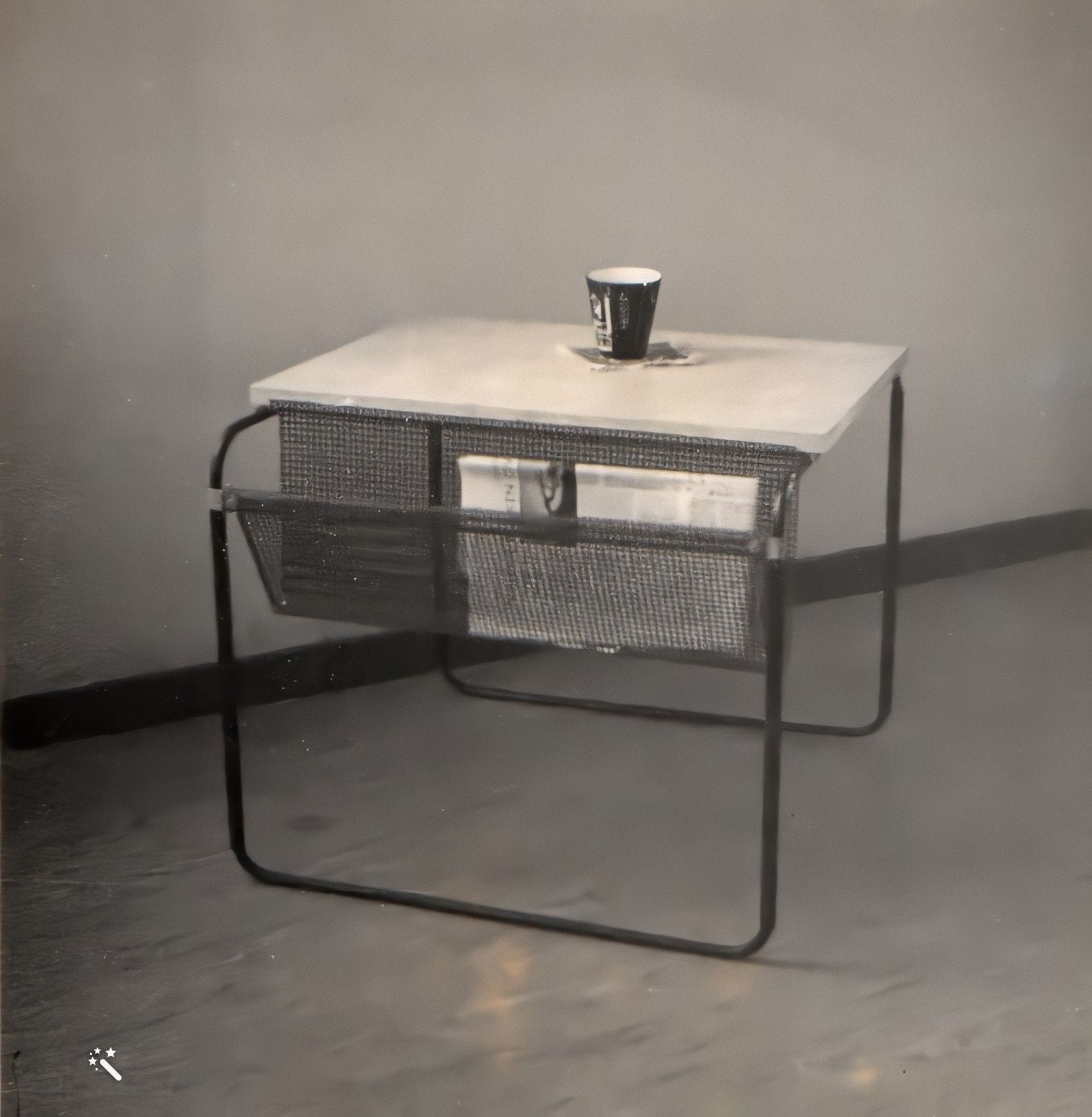
It was difficult, but not hopeless. I got a large commission to design a complete set of furniture for summerhouses. A number of camping grounds provided a kind of temporary accommodation, small cabins that were dismantled in autumn, stored away during winter, and resurrected in spring. My brief was to design modular furniture that could be assembled quickly and cheaply, and stored as flat panels when not in use. The few standard modules had to fit together to make chairs or tables or shelving or what not, simply by pushing the steel frames and wooden panels together.
I spent several months designing and building the prototypes, and thoroughly enjoyed it. The directors of the factory were delighted and straight away paid for my time.
Then things started to go wrong. The Dutch economy was in a downward trend, and the government introduced ‘investment restrictions’. No money was allowed to be invested in new industrial projects, no matter how small. And that meant the end of the furniture project for that factory. So, the royalties which they were going to pay me according to the contract would now not be forthcoming.
No indication that we would have a reasonable home for many years to come; not enough money to give our son the life we wanted to give to him, and no sign that the economy would begin to improve for a very long time yet.
Gino’s future looked bleak to us.
Just then some friends, a young couple who also wanted to set up house, told us they were considering emigrating. Like many thousands of Dutchmen, almost all of whom for the sake of their children.
Some years earlier a close friend of mine had emigrated too, to New Zealand, and we reluctantly began to think about following their example.
It was hard, very hard. Going away from both our families, our friends? Never see our parents again, our brothers, my sisters? We knew it would be forever; there could be no coming back home, no second chance. But there would be a place to live, big enough for our son and for, maybe, surely, a brother, and a sister for him as well. But giving up a promising career as an artist? Nobody would know us there, wherever we went. And we would be completely on our own, no support from anyone else.
We began to make inquiries. The USA was out; they were not interested in immigrants just then. Canada didn’t sound too bad, but didn’t they have some problems? French and English Canadians who didn’t like each other? And Eskimos who lived in houses made of ice whereas the white people lived in real houses? In the end, we decided we wouldn’t like their winters and Canada was out.
Brazil then? I had family in Brazil, a brother of my grandmother, who came to Holland at times with his whole family. They were rich though, painfully rich. He was a diamond trader and owned a flat in Paris and a villa on the Riviera as holiday homes. They would welcome us with open arms and I was sure he would have work for me. But living that rich lifestyle? Grandpa Cappèl had managed, he was well-to-do, but not excessively rich, and only fitted in by smiling at the antics of his wealthy friends. Could we fit in? It would be difficult to be recognized as an artist if people would think I only was successful because of the family money.
Maybe Australia? We heard that another friend, a ceramic artist, was planning to go there. We read up on that country and discovered the abysmal record of their aboriginal people. No way, Australia was out too.
We asked the New Zealand Embassy for information and were sent a colourful pamphlet about the Maori, who, so the pamphlet claimed, were the original owners of the country and were highly civilized and treated with respect by the white colonists. It sounded too good to be true.
We wrote to my friend in Christchurch, who answered that stuff about the Maori was nonsense, but everybody got along pretty well with each other. And he wrote about the freedom and the marvellous tramping and that he had found it easy to make new friends, and that he would be most happy to sponsor us.
‘You won’t get rich here,’ he wrote, ‘but it’s the best country in the world to bring up children.’
We talked it over ourselves, and talked it over with my parents and with Karen’s parents, and put in our application.
After some months we were invited to meet the ambassador for an interview.
The man told us I had to start by shaving off my beard. Beards were not acceptable in New Zealand.’