

Making New Friends
Our first home in New Zealand

Herman, our sponsor, was waiting for us on the Lyttelton wharf, ready to take us home to his flat in Christchurch. We had a great deal in common. He had been a close friend in that nature study club, the NJN, and he loved the outdoors. And like me, he had studied at the Rietveld Academy, so pretty soon after we arrived in New Zealand we started sculpting together.
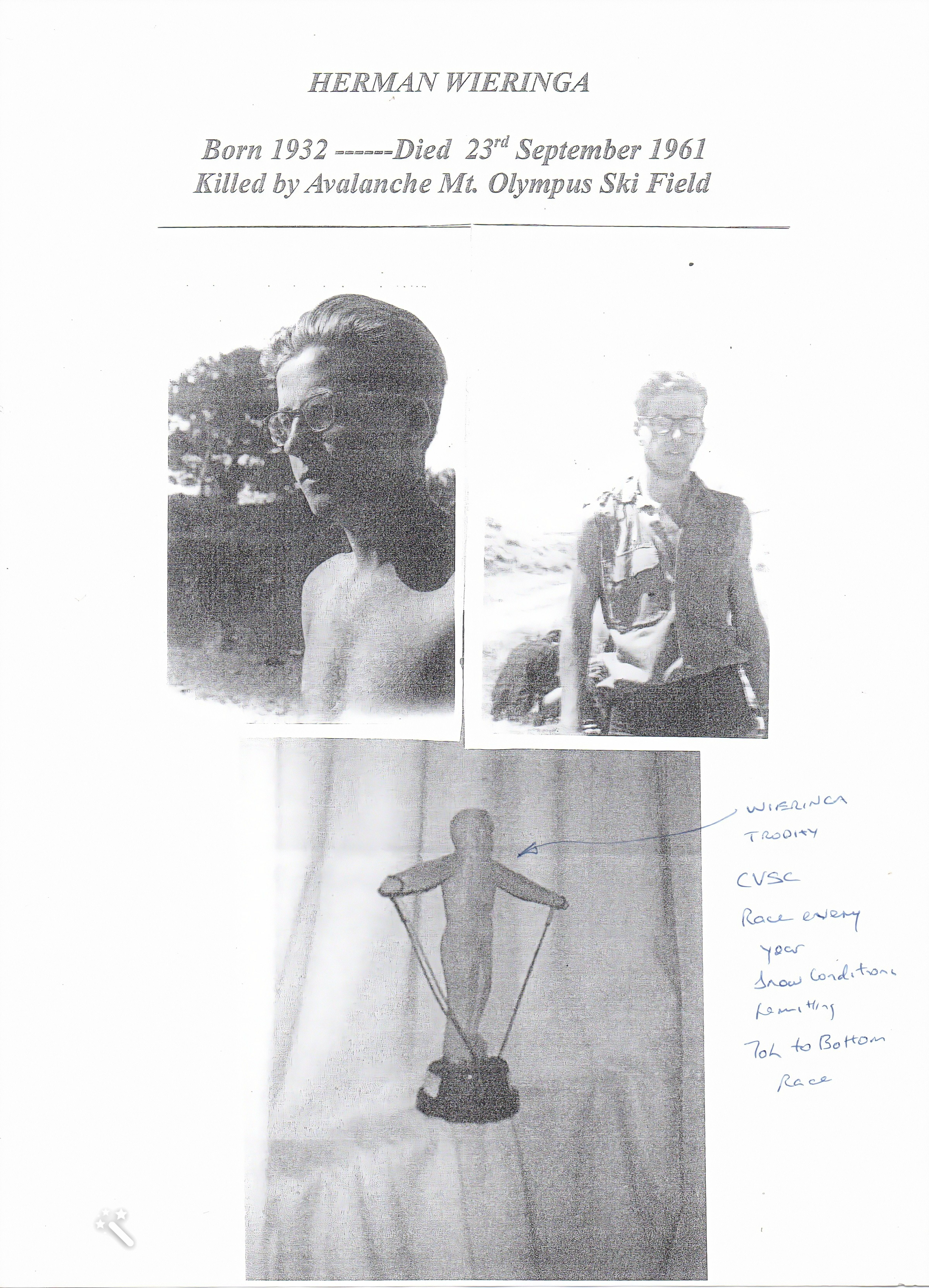
A few years later Herman got killed in an avalanche on the Craigieburn ski fields, but at least we shared some good years with him. Herman had found me a temporary job, making jewellery, and we stayed with him in his flat until we had found a place of our own.
The first place we saw advertised was in Lynwood. I borrowed a pushbike and went to see the landlady. She was in bed, not exactly sober. And by the way, I've never seen her out of bed, nor sober. 'Someone else has had a look at it already,' she said. 'But he has gone to discuss it with his wife first. I still have a spare key, if you want to you can have a look too.'
I had a look at the huge upstairs flat in an old house, raced back to the landlady. 'Has the other man been back yet? No? Then we'll take it. When can we move in?'
We borrowed two mattresses - a small one for Luigi and a large one for Karen and me - some cooking pots, plates, forks, knives and towels and a few more things like that, and settled in. Three enormous rooms, a smaller room more to Luigi’s liking, a big kitchen, and a very large bathroom with a stunning view of the Port Hills.
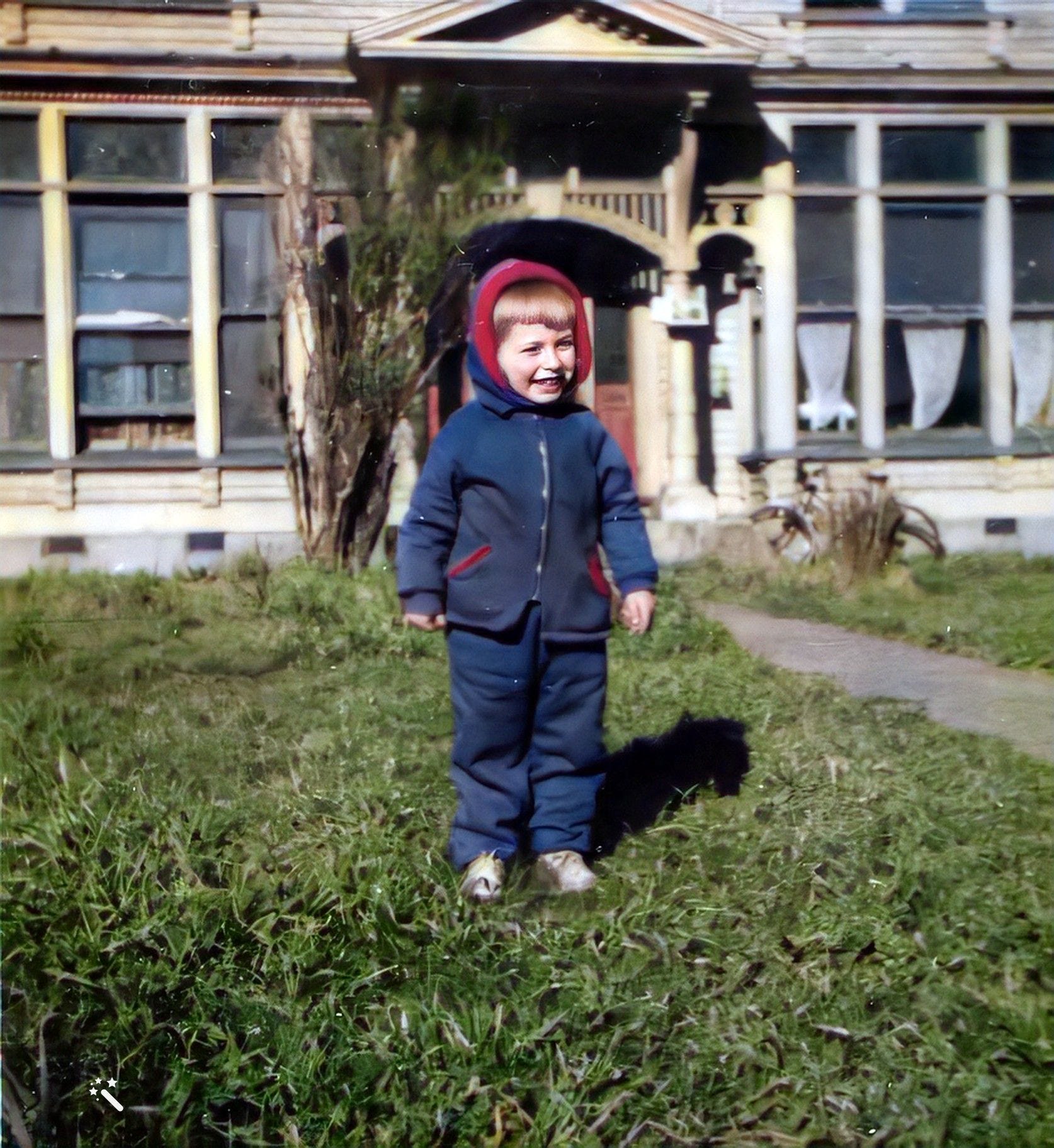
What more could we want? And our crate was due within a month, we were told. We had arrived in New Zealand in mid November, and in the first six weeks we managed to save enough money to travel north once more on the Maori, to celebrate our first Christmas with our newly found friends in Wellington.
We were lucky, there were still tickets available. And we were even luckier, because on board we met a couple who were to become very good friends. We were sitting on deck. The sea was smooth; the sky clear and in the distance the snow capped Kaikouras rose above a shore that reminded me of the Riviera. For Karen it was the first time in her life to see real mountains.
Young Luigi, still comfortably familiar with the sea, was pushing his toy car up and down the deck until he got bored with it and asked for his storybook. Of course the book was in Dutch, so when he took it to a middle-aged couple sitting on a nearby seat and asked them, also in Dutch, to read it for him, they smiled, shook their heads and, combining sign language and words, sent him back to us.
The man looked unmistakably Jewish and very friendly, so what could we do but introduce ourselves? Deny our mishpoche?' 'What's that, Grandpa, mishpoche?' 'I think the nearest to it would be the Maori concept of whanau. Not quite like the pakeha family, much wider in the sense that it is not restricted to blood relations or in-laws. I think the most important aspect of mishpoche is the strong sense of belonging. And that is what we felt straight away with that couple on the old Maori.
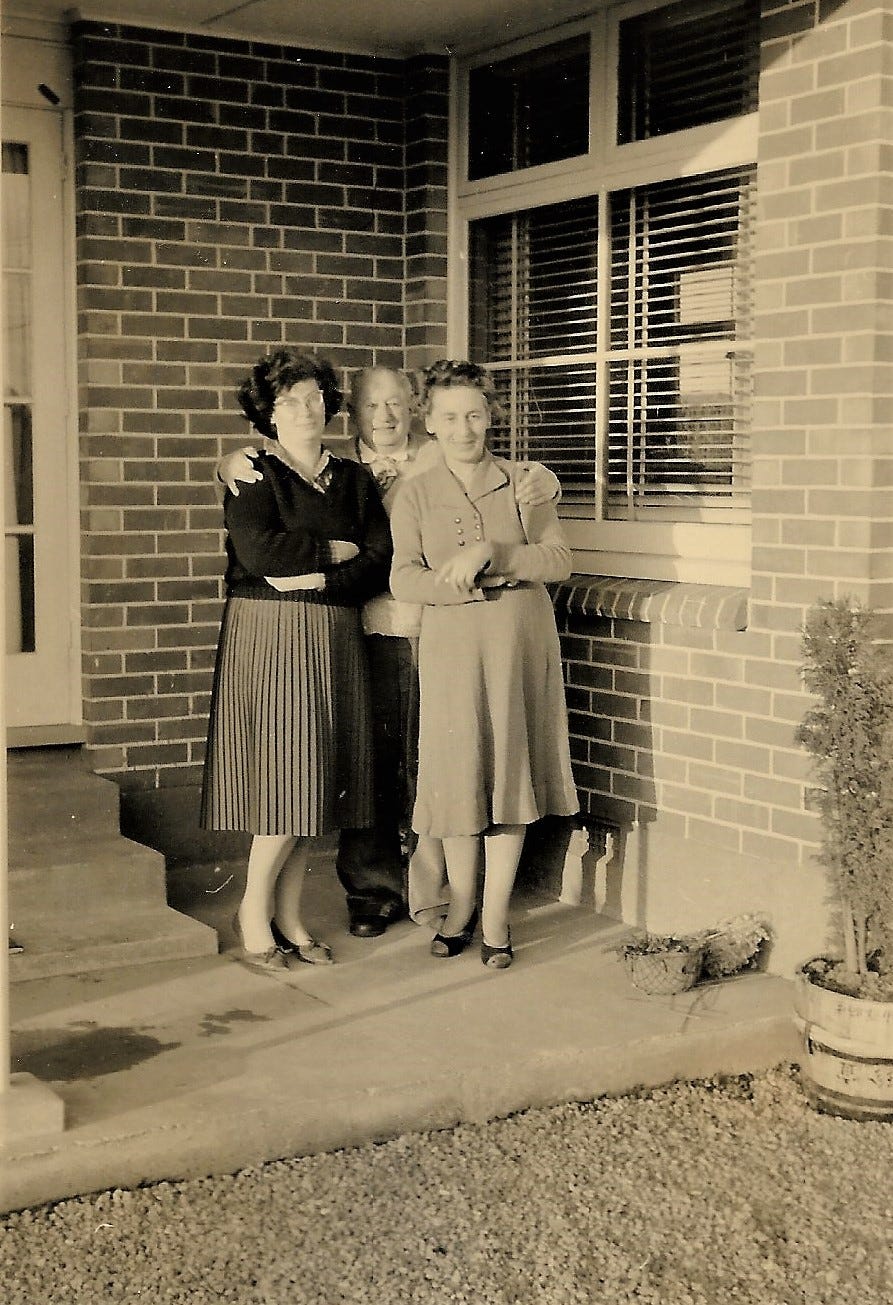
Nancy and Lutz their names were. It was Lutz who first took us to the Synagogue and introduced us to the rabbi. And it was together with Lutz that we had tea at the rabbi's home after the service. New Zealand slowly became our real home.
We never expected to see our family again. Even telephoning them was not realistic, considering the price per minute in those days, but we could count on their weekly letters, we had several friends and now we had our mishpoche. We didn't need to be secretive about our Jewish blood!
Shortly after New Year our crate finally arrived with all our belongings. It had taken longer to get from Wellington to Christchurch than from Holland to New Zealand, but at least it got there safely. And it was heavier than it was supposed to be. At the last moment in Holland they had charged us overweight, and now we discovered why: we found a beautiful big round tabletop packed in between our belongings. A tabletop, which we had never seen before. And a carpet which didn't belong to us either. We did find out who they belonged to though.
One day another immigrant from the Zuiderkruis came to visit us and he told us about yet another family who had only the legs of their table. Those people were really pleased to get their tabletop back. We never asked them to reimburse us for the overweight we paid, and they never offered it. They did say thank you though.
The jewellery job didn't last. As immigrants we were not entitled to any social benefits for the first year. Lose your job, and you had no income.
When I applied for a job with the NZ Railways, the man asked if I understood decimals. Silly question, we came from Holland: the decimal system was all I understood. 'Good,' the man said. 'The job is yours,' and I had just became a relay mechanic. I had a steady job again, and we were safe.
My new job was to overhaul and repair the automatic switches that controlled the points and the signals. The work was not particularly difficult; the difficult part was for me to understand my off-sider, who came from the north of Scotland. With his accent and my still rather shaky English, we had some interesting times when he tried to teach me the job.
And also incidentally, the work ethics. He told me not to work harder than anyone else, as my Dutch predecessor had been given the sack for not fitting in. 'He had worked too hard', he said. It may not have been true, but he certainly made a point of explaining that so clearly, that I couldn't possibly misunderstand it.